A bicycle is a simple machine, but it works hard. Dirt, water and daily use wear parts down gradually. Regular checks stop small problems turning into expensive or dangerous ones. You can do most of the routine work yourself with a handful of basic tools.
The schedule at a glance
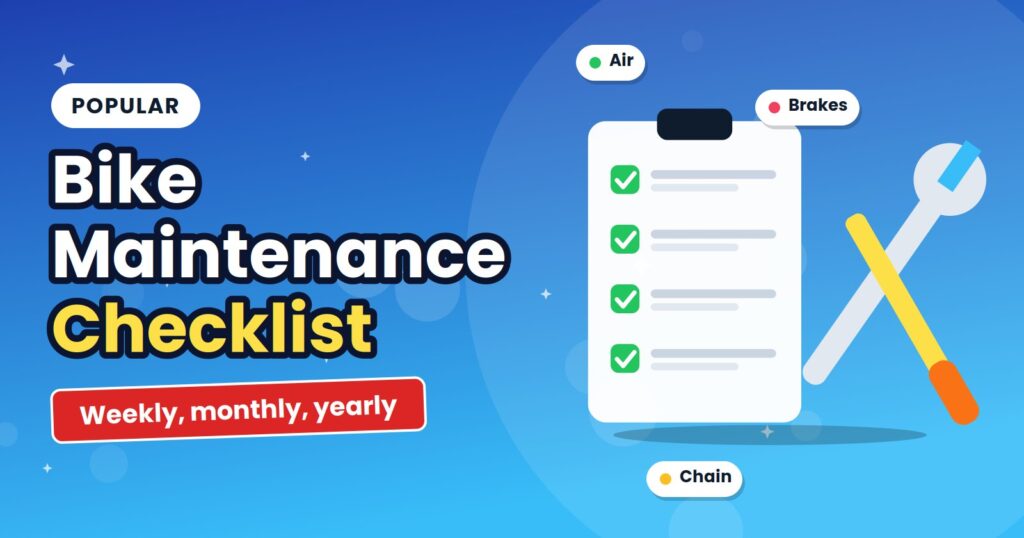
| When | What to do |
|---|---|
| Before every ride | Check tyre pressure, test both brakes, look over the chain and make sure wheels and quick releases are tight |
| Weekly | Wipe the frame, clean and lube the chain, check tyres for cuts and wear |
| Monthly | Check brake pad wear, test gear shifting, tighten bolts, check cables and look at the wheels for wobbles |
| Every 6 months | Deeper clean, check the chain for wear, inspect cables and brake rotors |
| Yearly | Professional service, including bearings, wheels and a full safety check |
Before every ride
Use the ABC check: air, brakes, chain. Press the tyres to check they are firm, squeeze both brake levers and look at the chain for rust or dryness. It takes less than a minute and catches the problems that cause most breakdowns.
Weekly care
- Wipe the frame with a damp cloth to remove dirt
- Clean and lubricate the chain (see our chain guide)
- Inspect tyres for cuts, embedded glass and uneven wear
- Check the pressure with a gauge; keep it in the range printed on the tyre
Monthly checks
- Brake pads: replace them when the wear lines disappear or the pad material is thin
- Bolts: check the stem, handlebar, seat post and wheel nuts; use a torque wrench if the maker lists a torque value
- Gears: shift through every gear; if shifting is slow or noisy, the cable may need adjusting
- Wheels: spin each wheel and watch the gap at the brakes for wobbles or loose spokes
Do not over-tighten bolts, especially on carbon parts. Too much force can crack components or strip threads.
Every six months
Give the bike a full wash, using mild soap and water. Avoid pressure washers, which can force water into bearings. Check the chain for wear with a chain checker and inspect brake and gear cables for fraying. Look at disc brake rotors for warping or contamination.
Yearly service
A good mechanic will check the headset, bottom bracket, hubs, wheels and cables, and adjust brakes and gears. If you ride every day or in wet or dusty conditions, service the bike more often.
Basic tool kit
- Floor pump with a pressure gauge
- Set of Allen (hex) keys
- Tyre levers and a puncture repair kit
- Chain lube and a degreaser
- Clean rags and a soft brush
When to see a mechanic
Leave jobs such as hydraulic brake bleeds, wheel truing and bearing overhauls to a professional unless you have been taught how. If something feels wrong with your brakes or steering, do not ride until it is checked. Learn simple fixes such as repairing a flat tyre so you are never stranded.
This guide is for general information only. Bikes, prices and local rules differ, so check your bike manual and local regulations, and see a qualified mechanic for safety-critical repairs. If you have a health concern, speak to your doctor before starting a new exercise routine.