A bicycle that is too big or too small is uncomfortable and can lead to sore knees, a painful back or numb hands. Getting the frame size right is the most important decision when buying a bike, and it only takes a few minutes to check. Use the chart below as a starting point, then confirm the fit with a test ride.
Approximate size chart
Sizes vary between brands, so treat these ranges as a guide. Road bikes are usually sized in centimetres and mountain bikes in letters or inches.
| Rider height | Road bike frame | Mountain bike frame |
|---|---|---|
| 150 to 160 cm | 47 to 49 cm | XS (13 to 14 in) |
| 160 to 168 cm | 50 to 52 cm | S (15 to 16 in) |
| 168 to 176 cm | 53 to 55 cm | M (17 to 18 in) |
| 176 to 184 cm | 56 to 58 cm | L (19 to 20 in) |
| 184 to 192 cm | 58 to 60 cm | XL (21 in and above) |
If you fall between two sizes, riders who like a relaxed position usually go smaller, and riders who want a stretched, sporty position usually go larger. A shop can adjust the fit with a different stem or seat post.
Check the standover height
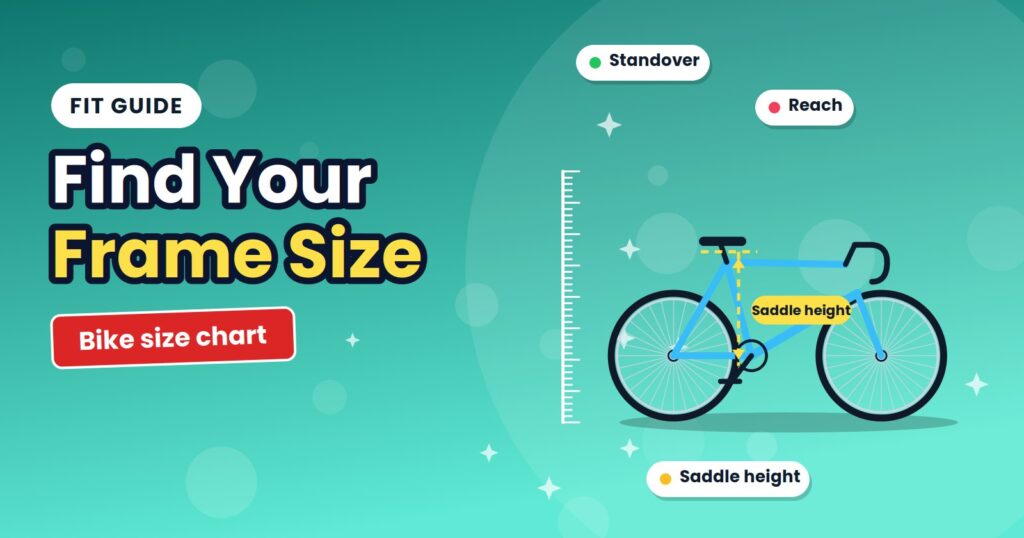
Stand over the top tube with both feet flat on the ground. On a road bike you should have about 2 to 3 cm of clearance. On a mountain bike you want more, around 5 cm or more, so you can step off safely on uneven ground.
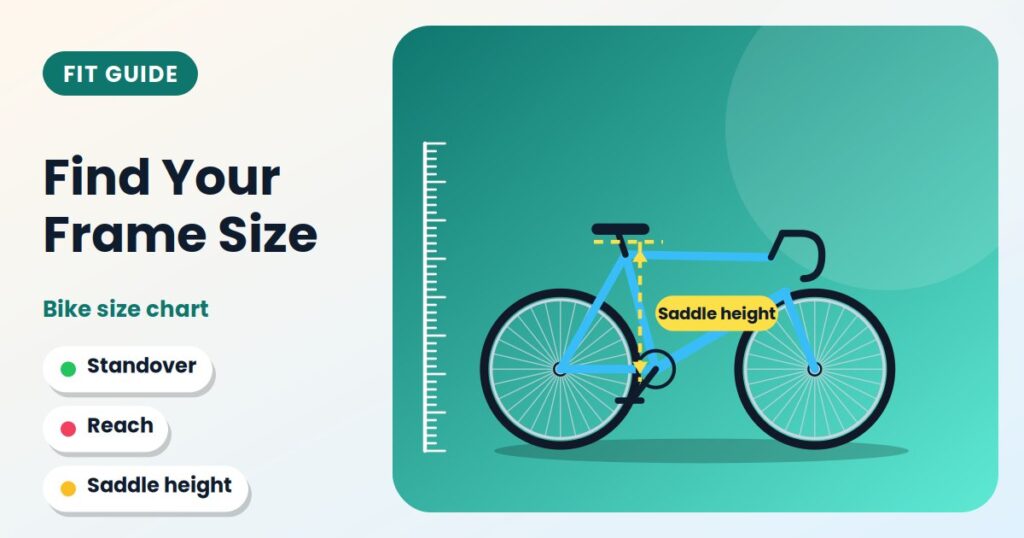
Set the saddle height
The saddle should be high enough that your leg is almost straight, but not locked, when the pedal is at its lowest point. With the ball of your foot on the pedal, your knee should have a slight bend. A saddle set too low is a common cause of knee pain.
- Sit on the bike with a wall or friend for support
- Place your heel on the pedal at the bottom of the stroke; the leg should be nearly straight
- Then move your foot to the ball of the foot; you should now have a gentle knee bend
- Adjust the seat post in small steps and test after each change
Check the reach
When you hold the handlebar, your elbows should be slightly bent and your shoulders relaxed. If you feel stretched, or if your arms are fully locked, the frame is probably too long or too short for you. A shorter stem can fix a small reach problem.
Kids’ bikes are sized by wheel
Children’s bikes are normally sized by wheel diameter, such as 16, 20 or 24 inches. Choose based on the child’s inseam and ability to place both feet on the ground, and avoid buying a bike to “grow into”, because a bike that is too large is harder to control.
Final thoughts
Use the chart to shortlist, then trust how the bike feels. Reading our beginner’s buying guide alongside this one will help you turn a fit check into a confident purchase.
This guide is for general information only. Bikes, prices and local rules differ, so check your bike manual and local regulations, and see a qualified mechanic for safety-critical repairs. If you have a health concern, speak to your doctor before starting a new exercise routine.