A helmet is the single most important piece of safety gear for a cyclist. It cannot prevent a crash, but a well-fitted helmet reduces the risk of serious head injury. A helmet that sits too high, is too loose or has been damaged gives far less protection, so it is worth knowing what to look for.
Look for a safety standard
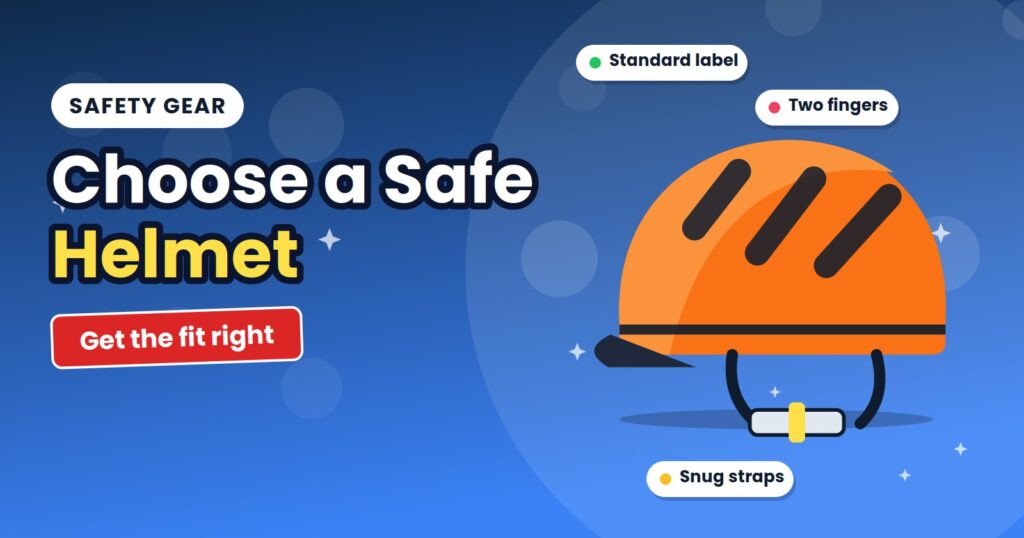
Choose a helmet that carries a recognised safety mark. Common ones include EN 1078 (Europe), CPSC (United States) and AS/NZS 2063 (Australia and New Zealand). The label is usually on a sticker inside the helmet. If a helmet has no standard marked, do not buy it, however good it looks.
Types of helmet
| Type | Features | Best for |
|---|---|---|
| Road | Lightweight with many vents | Fitness and long rides |
| Mountain bike | Extended rear coverage and a visor | Trails and rough terrain |
| Urban or commuter | Simple shape, often with a built-in light | Daily commuting |
| Children’s | Smaller sizes and an adjustable dial | Kids on bikes and scooters |
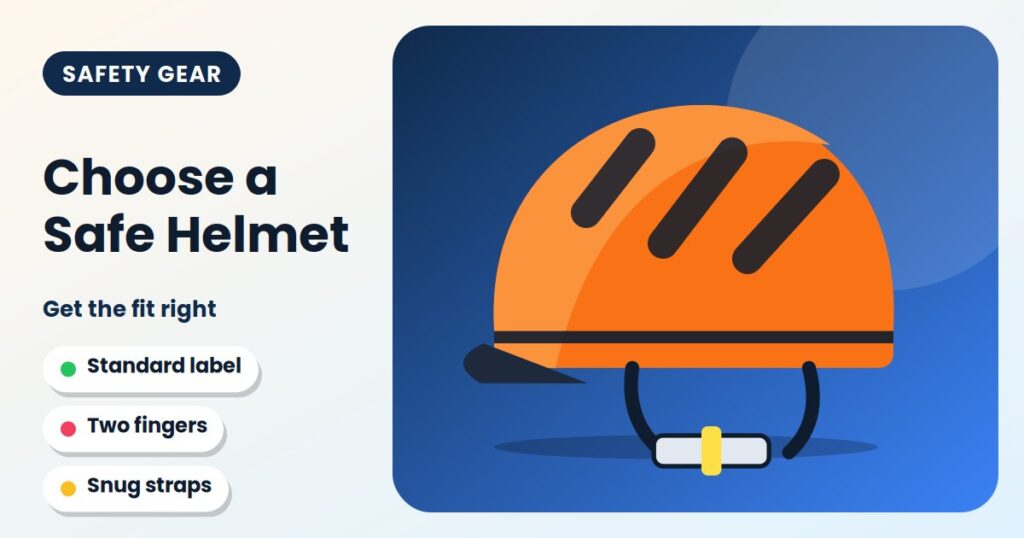
How to fit a helmet: eyes, ears, mouth
- Size: measure around your head, just above the eyebrows, and pick the matching size range
- Level: the helmet should sit flat on your head, with the front edge about two fingers’ width above your eyebrows
- Side straps: adjust them so they form a V just under each ear
- Chin strap: tighten it until you can fit only one finger between the strap and your chin
- Shake test: open your mouth wide; the helmet should pull down slightly. Shake your head; it should not slide around
A helmet should feel snug but not painful. If it moves when you shake your head, adjust the dial or pads, or try a different size or brand.
What is MIPS?
Some helmets include a low-friction layer such as MIPS that is designed to reduce rotational forces in certain impacts. These helmets cost more. A correctly fitted helmet that meets a recognised standard is the priority; extra technology is a bonus.
When to replace your helmet
- After any crash, even if it looks undamaged, because the foam may be compressed
- If you can see cracks, dents or a broken buckle
- Roughly every 3 to 5 years, or as the manufacturer advises, because sun and sweat age the materials
- Never buy a second-hand helmet, as you cannot know its history
Care tips
Wash the helmet with mild soap and water, let it dry naturally and store it away from direct heat. Do not leave it in a hot car. Avoid sticking stickers on it unless the maker says they are safe.
Final thoughts
Pair your helmet with good lights and a secure lock and the rest of the essential gear for a safer, more confident ride.
This guide is for general information only. Bikes, prices and local rules differ, so check your bike manual and local regulations, and see a qualified mechanic for safety-critical repairs. If you have a health concern, speak to your doctor before starting a new exercise routine.