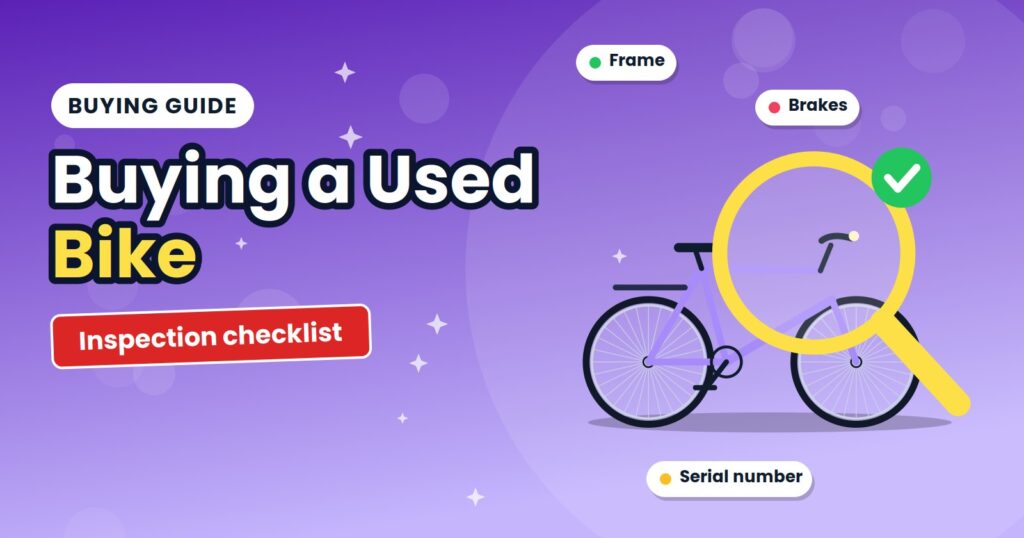
A used bicycle can give you far more bike for your money, but only if you know what to look for. Cheap bikes are sometimes cheap for a reason, such as worn parts, a hidden crack or even theft. This checklist helps you inspect a bike properly and negotiate with confidence.
Before you meet the seller
- Ask for the brand, model, year and frame size, and compare them with the photos
- Ask why they are selling and how often the bike has been serviced
- Ask for the serial number, usually stamped under the bottom bracket, to check it against local stolen-bike records where available
- Arrange to meet in a public place during daylight
Inspection checklist
| Part | What to check | Red flag |
|---|---|---|
| Frame and fork | Look for cracks, dents and rust, especially around welds and joints | Any crack or bent tube |
| Wheels | Spin each wheel and watch for wobbles; check for loose or broken spokes | Wheel that wobbles badly or rubs the brake |
| Tyres | Look at tread depth and sidewall cracks | Bald tyres or visible cords |
| Brakes | Squeeze the levers; they should feel firm and stop the bike | Spongy levers or worn pads |
| Chain and gears | Shift through all gears; check for skipping and a rusty or stretched chain | Chain that skips under load |
| Headset and bottom bracket | Hold the front brake and rock the bike; check for knocking or play in the cranks | Loose or notchy steering |
| Saddle and seat post | Make sure they move and tighten | Seat post seized in the frame |
The test ride
Never buy without riding. Check that the bike tracks straight with no hands for a moment, that the brakes work in a safe area and that it feels comfortable. Listen for clicks, grinding or squeaks.
Check the paperwork and the serial number
Ask for the original receipt if available, and check that the serial number has not been scratched or filed off. If the seller cannot explain where the bike came from, be cautious. Buying stolen property is harmful and can get you into trouble.
Rule of thumb: if the price seems too good to be true, or the seller is pressuring you to decide immediately, walk away.
Budget for repairs
Most used bikes need a service. Allow for new brake pads, a chain, cables or tyres, and get a mechanic to check it over. Subtract the likely repair cost from your offer.
Negotiating the price
- Point out real faults politely and ask for a lower price
- Offer cash only when you are happy with the bike
- Be ready to walk away; there is always another bike
Final thoughts
With a careful inspection, a used bike can be an excellent buy. If you are unsure, take a knowledgeable friend or ask a local shop to look it over for a small fee. Read our budget guide for the other costs to plan for.
This guide is for general information only. Bikes, prices and local rules differ, so check your bike manual and local regulations, and see a qualified mechanic for safety-critical repairs. If you have a health concern, speak to your doctor before starting a new exercise routine.