Riding in traffic can feel intimidating at first. With the right habits, it becomes manageable and even enjoyable. This guide builds on our basic safety rules with practical tips for busy roads, junctions and night riding.
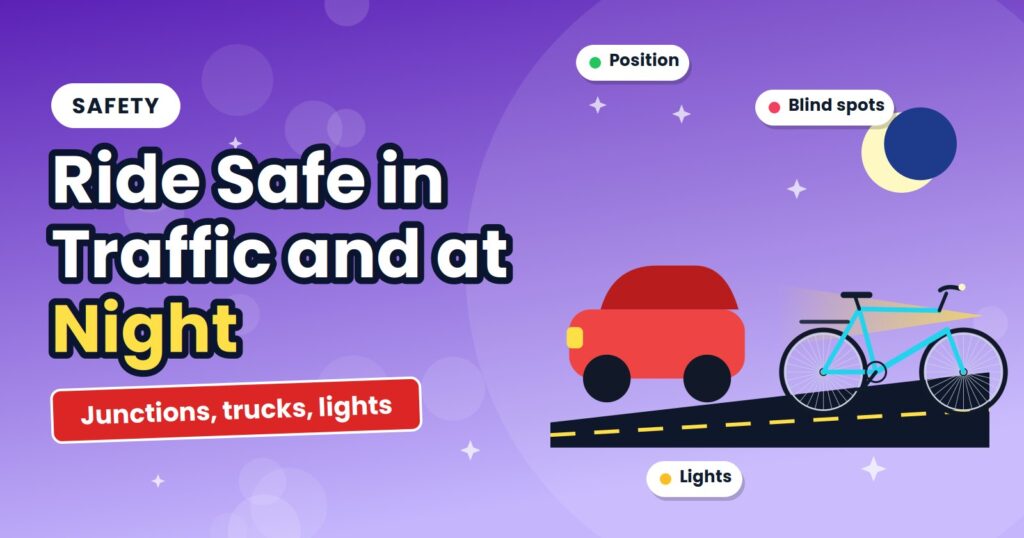
Choose your road position
Ride in a position where drivers can see you and where you have space to react. Staying very close to the kerb can invite close passes and leaves you little room to avoid hazards. On a narrow lane where a car cannot pass safely, it can be better to ride further out so that drivers wait. Check your local laws, which differ between countries.
Handling junctions and roundabouts
- Slow down and scan both directions before entering
- Make eye contact with drivers, and do not assume they have seen you
- Signal clearly and early
- Be extra careful of vehicles turning across your path
- At roundabouts, ride where you are visible and stay alert to cars entering and leaving
Trucks, buses and blind spots
Large vehicles have big blind spots at the front corners, along the sides and at the rear. Never ride up the inside of a lorry or bus that is turning, and do not stop beside one at lights. Hang back or wait in front where the driver can see you.
Riding at night
- Use a bright white front light and a red rear light, with spare batteries or a charged USB light
- Wear reflective strips on your ankles, arms and back, which move and are easy for drivers to notice
- Choose well-lit routes where possible
- Slow down, because it is harder to see potholes and hazards
- Clean your lights and reflectors regularly
See our guide to the best lights and locks for help choosing.
Riding in the rain
Wet roads reduce grip, and brakes take longer to stop you. Brake earlier and more gently, avoid painted lines and metal covers when you can and keep your tyres in good condition. Mudguards and a light rain jacket make wet riding far more comfortable.
| Situation | What to do |
|---|---|
| Heavy traffic | Stay calm, keep a steady line and avoid weaving |
| Dark roads | Use bright lights and reflective clothing |
| Rain | Slow down, brake early and watch for slippery surfaces |
| Dogs or animals | Slow down, stay calm and do not sprint; keep your distance |
| Hot weather | Ride earlier or later in the day and carry extra water |
If a road feels too busy, you are allowed to choose a different route. A slightly longer, quieter road is often a better choice.
Final thoughts
Confidence in traffic comes from experience and good habits. Start on quieter roads, build up gradually and always ride in a way that gives you time to react. Combine these tips with a well-fitted helmet and a well-maintained bike.
This guide is for general information only. Bikes, prices and local rules differ, so check your bike manual and local regulations, and see a qualified mechanic for safety-critical repairs. If you have a health concern, speak to your doctor before starting a new exercise routine.