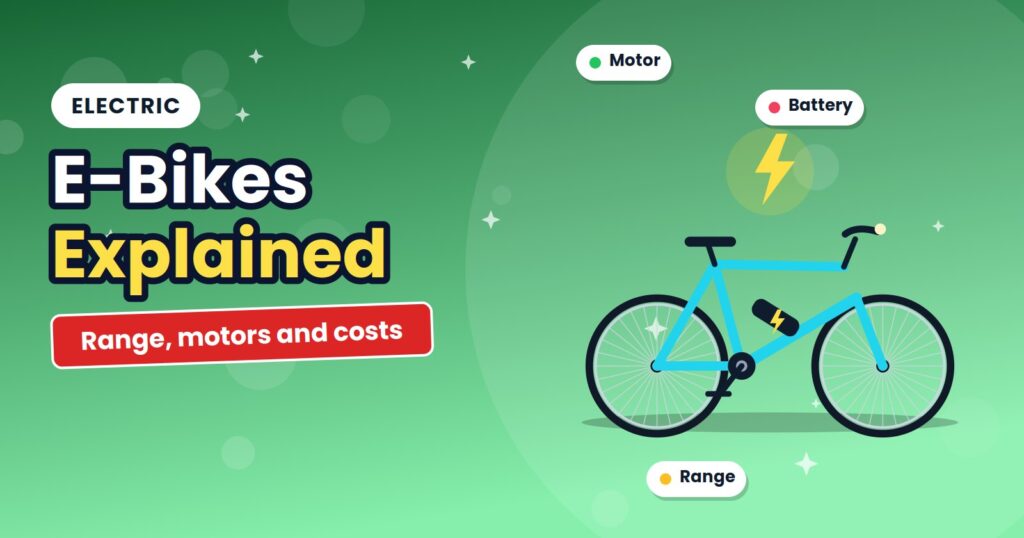
An electric bike looks like an ordinary bicycle, with a motor and a battery added. The motor gives you extra power while you pedal, so hills feel flatter and longer rides feel shorter. E-bikes are growing in popularity with commuters, older riders and anyone who wants to carry more or arrive less tired.
How an e-bike works
Most e-bikes use pedal assist: sensors detect that you are pedalling and the motor adds power in proportion. You choose an assist level, such as eco, normal or high. Some bikes also have a throttle that works without pedalling, but these are restricted or treated differently in many countries.
Rules differ widely. Many places limit the motor’s assisted speed (25 km/h is common in Europe) and the motor’s power. Check your local regulations before you buy, because they decide where you may ride and whether you need registration or insurance.
Hub motor or mid-drive?
| Motor type | How it feels | Pros | Cons |
|---|---|---|---|
| Rear hub motor | Pushes the bike from the back wheel | Lower cost, simple, quiet | Less natural on steep hills |
| Front hub motor | Pulls the bike from the front | Cheapest option | Can feel odd on loose surfaces |
| Mid-drive motor | Powers the cranks and uses the gears | Natural feel, great for climbs | Higher price and more chain wear |
Understanding battery size and range
Battery capacity is measured in watt-hours (Wh). A bigger number means more energy. Many riders use roughly 8 to 15 Wh per kilometre, depending on the assist level, rider and cargo weight, hills, wind and tyre pressure. On that basis, a 500 Wh battery might cover roughly 35 to 60 km. Treat the maker’s claimed range as the best case, not the typical one.
- Riding in the highest assist level drains the battery fastest
- Cold weather reduces battery performance
- Keeping tyres properly inflated improves range
- Lighter riders and flatter routes get more distance
What does an e-bike cost?
E-bikes cost noticeably more than similar non-electric bikes, because of the motor, battery and controller. Running costs are low: charging a battery usually costs very little electricity. Plan for a battery replacement after several years of regular use, because batteries wear out gradually.
Who benefits most?
- Commuters who want to avoid arriving sweaty
- Riders in hilly areas
- People returning to exercise or recovering fitness
- Anyone carrying children, shopping or work gear
- Riders who want to keep up with faster friends
An e-bike still gives you exercise. Some studies suggest e-bike riders often ride more regularly than they would on a regular bike.
Care and safety
Charge the battery with the supplied charger only, keep it away from heat and moisture and do not leave it charging unattended overnight. Brakes matter more on an e-bike because the bike is heavier and faster, so check them often. Ask a shop for advice on commuting by e-bike if that is your goal.
Final thoughts
An e-bike is a great option if hills, distance or loads put you off cycling. Test ride a few, ask about warranty and battery replacement, and confirm local rules before you pay.
This guide is for general information only. Bikes, prices and local rules differ, so check your bike manual and local regulations, and see a qualified mechanic for safety-critical repairs. If you have a health concern, speak to your doctor before starting a new exercise routine.